

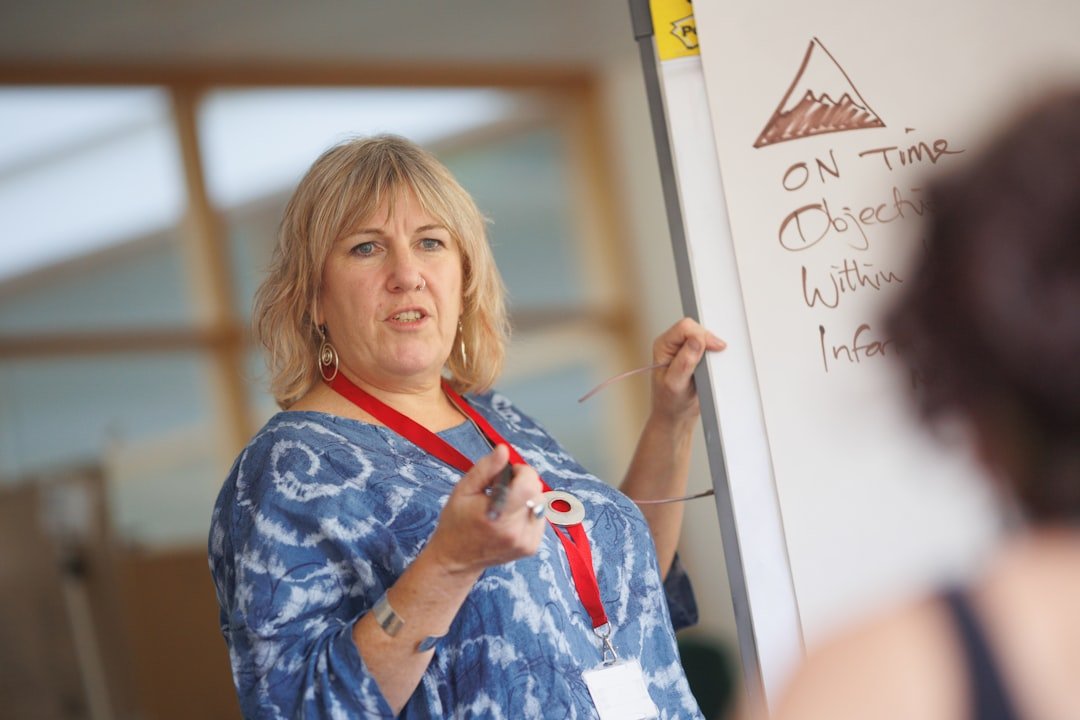
Karen Gross has built a distinguished career spanning higher education administration, policy advocacy, and authorship focused on student success. As the former president of Southern Vermont College, she championed accessibility and innovative approaches to supporting underserved students. Her work extends beyond campus leadership into national conversations about educational equity, trauma-informed practices, and the future of American higher education.
Quick Takeaways
Karen Gross served as president of Southern Vermont College from 2007 to 2014, where she focused on access, affordability, and student retention. She held senior roles in the U.S. Department of Education, including Senior Policy Advisor. Gross is the author of multiple books on education, including “Breakaway Learners” and trauma-informed educational resources. Her work emphasizes practical strategies for supporting students who face systemic barriers to academic achievement.
Background and Early Career
Karen Gross grew up in a family that valued education as a pathway to opportunity. She earned her bachelor’s degree from Smith College and her law degree from Temple University School of Law. Before entering higher education administration, Gross practiced law and taught as a law professor, experiences that shaped her analytical approach to institutional challenges.
Her early academic career included faculty positions where she developed expertise in commercial law, bankruptcy, and contract law. This legal background later informed her approach to college governance and compliance matters in her administrative roles. Gross also served in leadership positions within professional legal education organizations, building networks that would support her transition to college administration.
The combination of legal training, classroom teaching, and professional service created a foundation for her later work in institutional leadership. Colleagues from this period describe her as someone who bridged theoretical frameworks with practical implementation—a skill that became central to her presidency and policy work.
Southern Vermont College Presidency
When Karen Gross assumed the presidency of Southern Vermont College in 2007, she inherited a small liberal arts institution facing financial pressure and enrollment challenges. The college, located in Bennington, Vermont, served a significant population of first-generation and low-income students. Gross saw these demographics not as obstacles but as the institution’s core mission.
During her seven-year tenure, she implemented several strategic initiatives. The college restructured its curriculum to emphasize career-connected learning while maintaining liberal arts foundations. She launched a “Breakaway Learners” program targeting students who had previously struggled in traditional academic settings. Enrollment grew modestly, and retention rates improved through enhanced advising and support services.
Financial stabilization proved more difficult. Like many small private colleges, Southern Vermont College wrestled with rising costs and limited endowment. Gross pursued partnerships with community colleges, international recruitment, and alternative revenue streams. The college ultimately closed in 2019, several years after her departure, a fate shared by numerous similar institutions during that period.
Her presidency is remembered for centering the student experience in institutional decision-making. Faculty and staff who worked with her recall a leader willing to experiment with new models while protecting the college’s essential character.
Policy Work and Federal Service
Following her presidency, Karen Gross joined the U.S. Department of Education as a Senior Policy Advisor. In this role, she contributed to federal initiatives on college access, affordability, and completion. Her portfolio included work on experimental sites for competency-based education, prior learning assessment, and institutional accountability metrics.
Gross brought a practitioner’s perspective to policy development. Rather than approaching regulation from a purely compliance standpoint, she advocated for policies that reflected campus realities. This included pushing for flexibility in financial aid rules to accommodate non-traditional student pathways and arguing for metrics that captured student growth rather than only graduation rates.
Her federal service also involved collaboration with other agencies on cross-cutting issues like foster youth education, veteran transitions to college, and rural educational access. These experiences deepened her understanding of how federal, state, and institutional policies intersect to shape student outcomes.
After leaving the Department, Gross continued policy engagement through board service, consulting, and public commentary. She has testified before congressional committees and state legislatures on higher education legislation, consistently emphasizing evidence-based approaches over ideological positions.
Trauma-Informed Education Advocacy
One of Karen Gross’s most significant contributions is advancing trauma-informed practices in higher education. While K-12 systems have increasingly adopted trauma-informed frameworks, colleges and universities have been slower to do so. Gross argues this gap harms students precisely when they need support most—the transition to independent adult learning.
Her framework extends beyond individual accommodations to institutional culture. This includes training faculty to recognize trauma responses in classroom behavior, designing policies that don’t re-traumatize (such as rigid attendance rules or punitive financial holds), and creating physical and social environments that promote psychological safety.
Gross emphasizes that trauma-informed education isn’t therapy—it’s pedagogy. The goal isn’t to treat trauma but to create conditions where learning can occur despite it. This distinction matters because it positions the work within every educator’s responsibility rather than delegating it solely to counseling centers.
She has worked with individual institutions and systems to implement these approaches, often starting with leadership teams before expanding to faculty and staff. The process typically involves policy audits, professional development, and iterative assessment. Results from early adopters show improvements in retention, particularly among student populations with high trauma exposure.
Approach to Student Success
Karen Gross’s philosophy of student success centers on three principles: asset-based framing, institutional responsibility, and systemic thinking. Rather than asking “Why isn’t this student ready for college?” she asks “Why isn’t this college ready for this student?”
Asset-based framing means identifying the strengths students bring—resilience, perspective, motivation, cultural knowledge—rather than cataloging deficiencies. This doesn’t ignore academic gaps but contextualizes them. A student who navigated foster care, worked full-time through high school, or translated for immigrant parents has developed capabilities that traditional metrics miss.
Institutional responsibility shifts the burden of adaptation from student to college. If a policy disproportionately excludes certain populations, the policy—not the population—should change. This applies to financial aid processes, registration systems, curriculum design, and faculty expectations.
Systemic thinking recognizes that student success isn’t produced by isolated programs but by aligned structures. Advising, financial aid, instruction, housing, and career services must work in concert. Gross advocates for “student success ecosystems” where every office understands its role in the larger picture.
These principles translate into specific practices: early alert systems connected to proactive outreach, financial aid counseling that prevents crises rather than reacting to them, faculty development on inclusive pedagogy, and data systems that track momentum metrics alongside completion rates.
| Publication | Year | Focus Area | Audience |
|---|---|---|---|
| Breakaway Learners: Strategies for Post-Secondary Success with At-Risk Students | 2017 | Student success frameworks, institutional change | Administrators, faculty, policymakers |
| Trauma Doesn’t Stop at the School Door: Strategies for PreK–College Educators | 2020 | Trauma-informed education across levels | Educators, counselors, administrators |
| Lady Lucy’s Quest (children’s series) | 2016–2019 | Empowerment, problem-solving | Young readers, families, educators |
| Numerous articles and chapters | Ongoing | Higher education policy, leadership, ethics | Academic and professional communities |
Current Work and Legacy
Today, Karen Gross continues her work as an independent consultant, author, and speaker. She advises colleges and universities on presidential searches, strategic planning, crisis management, and student success initiatives. Her consulting often focuses on institutions in transition—those facing leadership changes, financial pressure, or mission redefinition.
She serves on several boards, including organizations focused on foster youth education, college access, and educational innovation. These roles keep her connected to on-the-ground implementation while informing her broader advocacy.
Gross’s legacy in higher education is still unfolding. Former colleagues at Southern Vermont College and the Department of Education describe her influence in shaping how a generation of administrators thinks about equity—not as a separate initiative but as the lens through which all decisions pass. Her writing continues to be assigned in graduate programs for higher education administration.
Perhaps her most enduring contribution is reframing the conversation about “non-traditional” students. By demonstrating that these learners are actually the new majority, and that their success requires institutional transformation rather than student remediation, she helped shift the field’s center of gravity. The ongoing closure of small colleges and demographic shifts in college-going populations make her work increasingly relevant.
Conclusion
Karen Gross’s career illustrates how legal training, classroom experience, institutional leadership, and federal policy work can converge to produce practical insights for American higher education. From the president’s office at a small Vermont college to the Department of Education in Washington, she consistently centered the students most often overlooked by traditional systems.
Her books and articles provide roadmaps for educators willing to examine whether their institutions serve the students they actually enroll rather than the students they wish they enrolled. The trauma-informed framework she champions addresses a silent epidemic affecting learning at every level. And her emphasis on asset-based approaches offers an alternative to deficit narratives that have dominated educational discourse for decades.
For anyone working in or studying higher education, Gross’s work merits engagement—not because it offers simple solutions, but because it asks better questions. The next step for readers is to examine their own contexts through her frameworks: Where do policies create unnecessary barriers? What strengths do “at-risk” students actually possess? How might trauma-informed practices change daily interactions on campus? The answers won’t be identical across institutions, but the questions apply everywhere.
Frequently Asked Questions
Who is Karen Gross?
Karen Gross is an American educator, author, and former college president. She served as president of Southern Vermont College from 2007 to 2014 and as a Senior Policy Advisor at the U.S. Department of Education. She has authored multiple books on student success, trauma-informed education, and higher education leadership.
What is Karen Gross best known for?
Karen Gross is best known for her work on “breakaway learners”—a framework for supporting students who overcome adversity—and for advancing trauma-informed practices in higher education. Her presidency at Southern Vermont College and federal policy work also contribute to her recognition in the field.
What books has Karen Gross written?
Karen Gross has written “Breakaway Learners: Strategies for Post-Secondary Success with At-Risk Students” (2017), co-authored “Trauma Doesn’t Stop at the School Door” (2020), and created the “Lady Lucy” children’s book series. She has also published numerous articles and book chapters on higher education policy and leadership.
What is the breakaway learners concept?
The breakaway learners concept reframes students traditionally labeled “at-risk” as individuals who have developed resilience, adaptability, and problem-solving skills through overcoming adversity. Gross argues institutions should recognize and cultivate these strengths rather than focusing exclusively on academic deficits.
How does Karen Gross define trauma-informed education?
Karen Gross defines trauma-informed education as pedagogical and institutional practices that create conditions for learning despite trauma—not therapy, but structural and cultural changes that prevent re-traumatization and promote psychological safety for all students.
What was Karen Gross’s role at the U.S. Department of Education?
As Senior Policy Advisor, Karen Gross worked on federal initiatives related to college access, affordability, and completion. Her portfolio included competency-based education experiments, prior learning assessment, institutional accountability, and cross-agency work on foster youth and veteran education.
Why did Southern Vermont College close?
Southern Vermont College closed in 2019, several years after Karen Gross’s presidency ended. The closure reflected challenges common to small private colleges: declining enrollment, rising costs, limited endowment, and demographic shifts. Gross’s tenure had focused on stabilization and student success initiatives.
Where can I find Karen Gross’s current work?
Karen Gross currently works as an independent consultant, author, and speaker. She serves on several educational boards and continues publishing articles on higher education policy, leadership, and student success. Her books are available through major retailers and academic publishers.
