

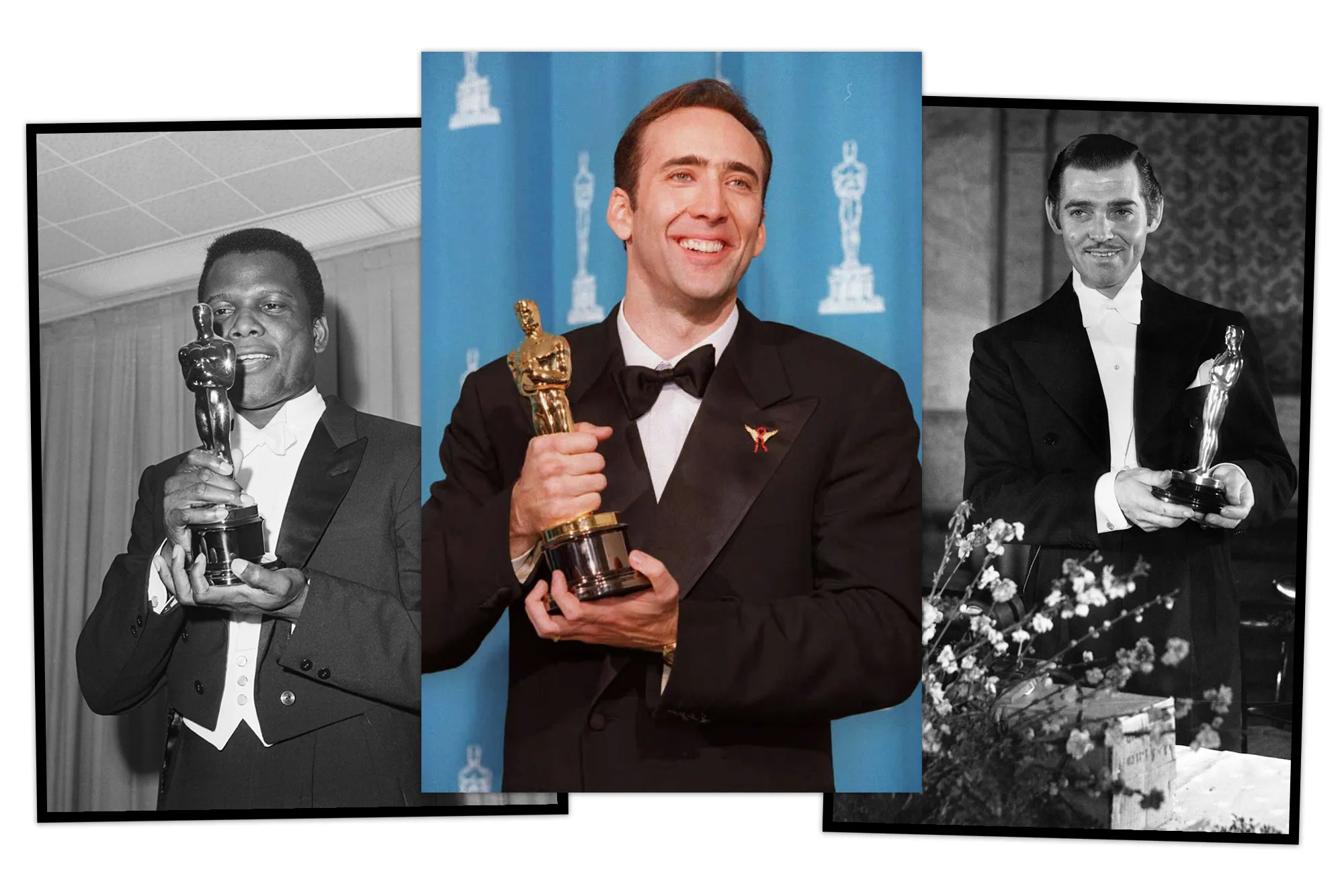
Quick Answer: What Is the Academy Award for Best Actor?
The Academy Award for Best Actor is presented annually by the Academy of Motion Picture Arts and Sciences (AMPAS) to recognize the finest leading performance by a male actor in a theatrical film released during the eligibility period. First awarded at the 1st Academy Awards in 1929 to Emil Jannings for The Last Command and The Way of All Flesh, it remains one of the most prestigious honors in global cinema. Winners receive a gold-plated statuette commonly known as the “Oscar.” As of the 97th Academy Awards (2025), 96 actors have won the award across 97 ceremonies (with one tie in 1932).
Background: Origins and Evolution of the Category
The First Ceremony and Early Years
When the Academy Awards debuted on May 16, 1929, at the Hollywood Roosevelt Hotel, the Best Actor category was unique: winners were honored for multiple films in a single year. Emil Jannings received the inaugural award for two performances—The Last Command and The Way of All Flesh—both released during the 1927–28 eligibility window. This practice ended after the 2nd Academy Awards; since 1930, actors have been nominated for a single, specific performance in one film.
Name Changes and Formalization
The category was officially called “Outstanding Performance by an Actor in a Leading Role” until 1936, when it was shortened to “Best Actor.” The nickname “Oscar” for the statuette gained traction in the 1930s—popularly attributed to Academy librarian Margaret Herrick remarking the figure resembled her Uncle Oscar—and was officially adopted by the Academy in 1939.
Eligibility Rules Over Time
Eligibility has evolved significantly. Early ceremonies used an August-to-July eligibility window; since the 7th Academy Awards (1935), the calendar year (January 1–December 31) has been standard. Since 2023, films must have a qualifying theatrical run of at least seven consecutive days in a commercial theater in one of six U.S. metropolitan areas (Los Angeles, New York, Bay Area, Chicago, Miami, Atlanta) to qualify. Streaming-only releases became eligible during the COVID-19 pandemic (2021–2022) under temporary rules that have since been formalized with theatrical requirements reinstated.
How the Winner Is Chosen: Voting Process Explained
Nomination Phase
Only members of the Actors Branch of AMPAS—currently over 1,300 working performers—vote to determine the five nominees. Each member ranks up to five performances in order of preference. The Academy uses a preferential voting (instant-runoff) system: if no performance receives a majority of first-place votes, the lowest-ranked contender is eliminated and those ballots are redistributed to the next preference until five nominees emerge.
Final Voting Phase
All active Academy members (approximately 10,500 across 19 branches) vote for the winner from the five nominees. Since 2009, the final ballot for Best Actor uses simple plurality voting—the nominee with the most votes wins—unlike Best Picture, which retains preferential voting. Voting occurs online over roughly one week in late February or early March, with results tabulated by PricewaterhouseCoopers and kept secret until the envelope is opened on stage.
Campaigning and Its Influence
Studio “For Your Consideration” campaigns—screenings, Q&As, trade ads, and talent availability—play a significant role in shaping voter awareness. The Academy enforces rules limiting gifts, direct mail, and negative campaigning, but strategic visibility remains a decisive factor, especially in crowded years.
Complete List of Winners by Decade
1929–1939: The Foundational Era
| Year (Ceremony) | Winner | Film |
|---|---|---|
| 1929 (1st) | Emil Jannings | The Last Command / The Way of All Flesh |
| 1930 (2nd) | George Arliss | Disraeli |
| 1931 (3rd) | Lionel Barrymore | A Free Soul |
| 1932 (4th) | Fredric March / Wallace Beery (tie) | Dr. Jekyll and Mr. Hyde / The Champ |
| 1934 (5th) | Charles Laughton | The Private Life of Henry VIII |
| 1935 (6th) | Clark Gable | It Happened One Night |
| 1936 (7th) | Victor McLaglen | The Informer |
| 1937 (8th) | Paul Muni | The Story of Louis Pasteur |
| 1938 (9th) | Spencer Tracy | Captains Courageous |
| 1939 (10th) | Spencer Tracy | Boys Town |
1940–1959: Golden Age Dominance
This era saw back-to-back wins for Spencer Tracy (1937–38) and later for Tom Hanks (1993–94). Notable winners include James Cagney (Yankee Doodle Dandy, 1942), Gary Cooper (Sergeant York, 1941; High Noon, 1952), and Marlon Brando (On the Waterfront, 1954). The 1950s also introduced method acting to the mainstream, with Brando, Montgomery Clift, and James Dean reshaping screen performance expectations.
1960–1979: New Hollywood and Anti-Heroes
Winners reflected shifting cultural mores: Gregory Peck (To Kill a Mockingbird, 1962), Sidney Poitier (Lilies of the Field, 1963—first Black winner), Rex Harrison (My Fair Lady, 1964), Lee Marvin (Cat Ballou, 1965), and Dustin Hoffman (Kramer vs. Kramer, 1979). The 1970s brought gritty, morally complex protagonists—Gene Hackman (The French Connection, 1971), Jack Nicholson (One Flew Over the Cuckoo’s Nest, 1975), and Peter Finch (Network, 1976, posthumous).
1980–1999: Blockbusters and Biopics
Robert De Niro won his second Oscar for Raging Bull (1980). Ben Kingsley (Gandhi, 1982), Robert Duvall (Tender Mercies, 1983), and F. Murray Abraham (Amadeus, 1984) highlighted the biopic trend. The 1990s saw Tom Hanks win consecutive awards (Philadelphia, 1993; Forrest Gump, 1994), Nicolas Cage (Leaving Las Vegas, 1995), Geoffrey Rush (Shine, 1996), and Roberto Benigni (Life Is Beautiful, 1998—first non-English language win).
2000–Present: Diversity, Transformation, and Global Cinema
The 21st century has broadened the category’s scope. Denzel Washington (Training Day, 2001), Jamie Foxx (Ray, 2004), Forest Whitaker (The Last King of Scotland, 2006), and Mahershala Ali (Green Book—Supporting, but Moonlight ensemble context) marked progress for Black actors. International winners accelerated: Daniel Day-Lewis (There Will Be Blood, 2007; Lincoln, 2012—three-time record holder), Jean Dujardin (The Artist, 2011—first French winner), Anthony Hopkins (The Father, 2020—oldest winner at 83), and Brendan Fraser (The Whale, 2022). Cillian Murphy won for Oppenheimer at the 96th Academy Awards (2024), and the 97th ceremony (2025) honored Adrien Brody for The Brutalist.
Record Holders: Most Wins, Nominations, and Milestones
Most Wins
| Actor | Wins | Years |
|---|---|---|
| Daniel Day-Lewis | 3 | 1989, 2007, 2012 |
| Spencer Tracy | 2 | 1937, 1938 |
| Fredric March | 2 | 1932, 1946 |
| Gary Cooper | 2 | 1941, 1952 |
| Marlon Brando | 2 | 1954, 1972 |
| Dustin Hoffman | 2 | 1979, 1988 |
| Tom Hanks | 2 | 1993, 1994 |
| Jack Nicholson | 2 | 1975, 1997 |
| Anthony Hopkins | 2 | 1991, 2020 |
Most Nominations
| Actor | Nominations | Wins |
|---|---|---|
| Laurence Olivier | 10 | 1 |
| Spencer Tracy | 9 | 2 |
| Paul Newman | 8 | 1 |
| Jack Nicholson | 8 | 2 |
| Peter O’Toole | 8 | 0 |
| Al Pacino | 8 | 1 |
| Denzel Washington | 8 | 2 |
| Daniel Day-Lewis | 6 | 3 |
Age Milestones
- Youngest winner: Adrien Brody, 29 years 343 days, for The Pianist (2002).
- Oldest winner: Anthony Hopkins, 83 years 115 days, for The Father (2020).
- Youngest nominee: Jackie Cooper, 9 years, for Skippy (1931).
- Oldest nominee: Anthony Hopkins, 83, for The Father (2020).
Other Notable Records
- Only tie: Fredric March and Wallace Beery, 1932 (Beery won by one vote after recount; Academy rules at the time allowed ties within one vote).
- Only posthumous winner: Peter Finch, Network (1976). Heath Ledger won posthumously for Supporting Actor (2008).
- First non-English language win: Roberto Benigni, Life Is Beautiful (Italian, 1998).
- First Black winner: Sidney Poitier, Lilies of the Field (1963).
- First Asian winner: None yet in Best Actor (as of 2025).
Notable Snubs, Surprises, and Controversies
Famous Snubs
- Peter O’Toole (8 nominations, 0 wins): Holds the record for most Best Actor nominations without a win. Received an Honorary Oscar in 2003.
- Richard Burton (7 nominations, 0 wins): Never won for Who’s Afraid of Virginia Woolf?, The Spy Who Came in from the Cold, or Equus.
- Steve McQueen: Only nomination for The Sand Pebbles (1966); passed over for Bullitt, The Great Escape.
- Edward Norton: Snubbed for Fight Club (1999); nominated later for American History X and Birdman.
Controversial Wins
- 1979: Dustin Hoffman over Jack Lemmon: Many critics favored Lemmon’s The China Syndrome performance.
- 1990: Daniel Day-Lewis over Kenneth Branagh: Branagh’s Henry V was widely praised; Day-Lewis won for My Left Foot (deserved but debated).
- 2001: Denzel Washington over Russell Crowe: Crowe had won the SAG and BAFTA for A Beautiful Mind; Washington’s Training Day win was seen by some as a career award.
- 2022: Will Smith / Chris Rock incident: Smith won for King Richard moments after slapping presenter Chris Rock on live television, overshadowing the victory and leading to a 10-year Academy ban.
Category Fraud Debates
Several performances nominated in Best Actor were arguably supporting roles (e.g., Timothy Hutton, Ordinary People, 1980—won Supporting; Haing S. Ngor, The Killing Fields, 1984—won Supporting). The Academy does not formally define “leading” vs. “supporting”; placement is determined by studio campaign strategy.
Career Impact: What Winning Means for an Actor
Immediate Financial and Professional Effects
Studies by talent agencies and industry analysts (e.g., CAA, The Hollywood Reporter) consistently show a 20–40% salary increase for first-time winners on subsequent projects. Winning also correlates with increased offer volume, access to prestige directors, and greenlight authority for passion projects. However, the “Oscar curse” narrative—where winners follow with poorly received films—is largely anecdotal; data shows most winners maintain or elevate their project quality.
Long-Term Legacy and Typecasting Risks
A win cements an actor’s place in film history. For character actors (e.g., J.K. Simmons, Whiplash—Supporting), it can broaden range. For leading men, it may reinforce a specific persona (e.g., Adrien Brody’s intense transformation roles). Daniel Day-Lewis’s three wins enabled his selective, multi-year hiatuses. Conversely, winners like Cuba Gooding Jr. (Jerry Maguire, Supporting) struggled to find material matching the award’s prestige.
Impact on Film Box Office and Longevity
Best Actor winners typically see a 15–25% box office bump post-nomination and another 10–15% post-win (“Oscar bounce”). Library value increases significantly: winning films remain in streaming rotation and repertory programming for decades, generating residual revenue.
Best Actor vs. Best Supporting Actor: Key Differences
| Aspect | Best Actor | Best Supporting Actor |
|---|---|---|
| Screen time typical | Protagonist; majority of runtime | Secondary character; often <30% runtime |
| Narrative function | Drives central arc | Supports, opposes, or illuminates lead |
| Campaign strategy | Studio pushes lead as “face of film” | Often placed here to avoid vote-splitting |
| Notable category fraud | Leads placed in Supporting (rare) | Leads campaigned as Supporting (common) |
| Double nominees same film | Possible (e.g., The Godfather: Brando lead, Pacino/Caan supporting) | Possible; max 2 per film per category |
Category placement is a strategic decision by distributors. In 2023, Paul Mescal (Aftersun) was campaigned in Best Actor despite limited screen time; in 2024, Ryan Gosling (Barbie) was placed in Supporting despite co-lead status. The Academy does not audit screen time; voters decide based on perception.
Recent Trends and the Modern Era (2015–Present)
Transformation and Physical Commitment
Since Matthew McConaughey (Dallas Buyers Club, 2013) and Christian Bale (The Fighter, Supporting, 2010; Vice, 2018), extreme physical transformation—weight loss/gain, prosthetics, accent mastery—has become a de facto prerequisite for serious contention. Gary Oldman (Darkest Hour, 2017), Rami Malek (Bohemian Rhapsody, 2018), and Brendan Fraser (The Whale, 2022) followed this pattern.
Biopics Dominate
Of the last 15 winners, 11 portrayed real people: Ray Charles (Foxx), Truman Capote (Hoffman), Idi Amin (Whitaker), Harvey Milk (Penn), King George VI (Firth), Abraham Lincoln (Day-Lewis), Stephen Hawking (Redmayne), Freddie Mercury (Malek), Judy Garland (Zellweger—Actress), Dick Cheney (Bale), Elvis Presley (Butler), J. Robert Oppenheimer (Murphy). Voters favor measurable mimicry over invention.
Streaming and Theatrical Shifts
Netflix, Apple TV+, and Amazon have mounted serious campaigns: Adam Driver (Marriage Story, 2019), Anthony Hopkins (The Father, 2020), Will Smith (King Richard, 2021), Brendan Fraser (The Whale, 2022—A24 theatrical), Cillian Murphy (Oppenheimer, 2023—Universal theatrical). Theatrical release remains a prestige signal; streamers now ensure qualifying runs.
Diversity Progress and Gaps
Since #OscarsSoWhite (2015), Black winners increased: Washington (2001), Foxx (2004), Whitaker (2006), Smith (2021). No Asian actor has won Best Actor; Steven Yeun (Minari, 2020) and Riz Ahmed (Sound of Metal, 2020) were nominated. Latino representation: Benicio del Toro (Supporting, 2000), Anthony Quinn (two wins, 1952/1956—Mexican-born), José Ferrer (1950—Puerto Rican). The category remains predominantly white.
International Winners and Global Recognition
| Actor | Country of Origin | Film | Year |
|---|---|---|---|
| Emil Jannings | Germany / Switzerland | The Last Command / The Way of All Flesh | 1929 |
| Charles Laughton | England | The Private Life of Henry VIII | 1934 |
| Paul Muni | Austria-Hungary (now Ukraine) | The Story of Louis Pasteur | 1937 |
| Rex Harrison | England | My Fair Lady | 1964 |
| Peter Finch | Australia | Network | 1976 |
| Ben Kingsley | England | Gandhi | 1982 |
| Daniel Day-Lewis | England / Ireland | My Left Foot, There Will Be Blood, Lincoln | 1989, 2007, 2012 |
| Anthony Hopkins | Wales | The Silence of the Lambs, The Father | 1991, 2020 |
| Roberto Benigni | Italy | Life Is Beautiful | 1998 |
| Jean Dujardin | France | The Artist | 2011 |
| Gary Oldman | England | Darkest Hour | 2017 |
| Rami Malek | Egyptian-American | Bohemian Rhapsody | 2018 |
| Joaquin Phoenix | Puerto Rico / USA | Joker | 2019 |
| Anthony Hopkins | Wales | The Father | 2020 |
| Will Smith | USA | King Richard | 2021 |
| Brendan Fraser | USA / Canada | The Whale | 2022 |
| Cillian Murphy | Ireland | Oppenheimer | 2024 |
| Adrien Brody | USA | The Brutalist | 2025 |
International voters (non-U.S. members now exceed 20% of the Academy) have broadened the category’s horizons. However, English-language films still dominate; only Benigni (Life Is Beautiful) and Dujardin (The Artist, silent) won for non-English performances. The 2025 win for Adrien Brody in The Brutalist (English, but European-directed) continues the trend of transatlantic co-productions finding favor.
Conclusion
The Academy Award for Best Actor remains the definitive benchmark for leading male performance in cinema. From Emil Jannings in 1929 to Adrien Brody in 2025, the category has chronicled the evolution of screen acting—from theatrical projection to method immersion to digital-age transformation. Its history reflects broader cultural shifts: the breaking of color barriers, the rise of international cinema, the dominance of biographical mimicry, and the enduring power of theatrical exhibition. For actors, a nomination signals peer recognition; a win alters career trajectory, financial standing, and historical legacy. For audiences, the annual race offers a lens through which to evaluate what society values in masculinity, vulnerability, and storytelling at a given moment. As the Academy diversifies its membership and streaming reshapes distribution, the next decade will test whether the award can honor performances that defy traditional leading-man molds—whether in language, identity, or form. The most practical next step for any film enthusiast? Revisit the winning performances chronologically; they form an unofficial syllabus of 20th- and 21st-century acting technique.
Frequently Asked Questions
Who has won the most Academy Awards for Best Actor?
Daniel Day-Lewis holds the record with three wins: My Left Foot (1989), There Will Be Blood (2007), and Lincoln (2012). Nine other actors have won twice, including Spencer Tracy, Marlon Brando, Dustin Hoffman, Tom Hanks, Jack Nicholson, and Anthony Hopkins.
Who is the youngest actor to win Best Actor?
Adrien Brody won at age 29 years and 343 days for The Pianist (2002). He remains the youngest winner in the category’s history.
Who is the oldest actor to win Best Actor?
Anthony Hopkins won at age 83 years and 115 days for The Father (2020), making him the oldest winner in any acting category.
Has any actor won Best Actor for a non-English language performance?
Yes, two: Roberto Benigni for the Italian-language Life Is Beautiful (1998) and Jean Dujardin for the mostly silent French film The Artist (2011).
How are Best Actor nominees selected?
Members of the Academy’s Actors Branch (over 1,300 performers) vote via preferential ballot to select five nominees. All Academy members then vote via simple plurality to choose the winner.
Can an actor be nominated for Best Actor and Best Supporting Actor in the same year?
Yes, but not for the same performance. Jamie Foxx was nominated for Best Actor (Ray) and Best Supporting Actor (Collateral) in 2004, winning for Ray. Al Pacino, Kevin Spacey, and others have also achieved double nominations in a single year.
Has a streaming-only film ever won Best Actor?
Yes. Anthony Hopkins won for The Father (2020), which had a qualifying theatrical run but was primarily distributed by Sony Pictures Classics and later streamed. During the 2021–2022 pandemic window, streaming-only films were temporarily eligible; current rules require a theatrical qualifying run.
What is the “Oscar curse” for Best Actor winners?
The “Oscar curse” is a media narrative suggesting winners follow their win with career downturns or poor film choices. Statistical analysis shows no significant evidence; most winners maintain or improve their project quality, though public scrutiny increases.
